Best Large Electric Pressure Cooker Manufacturers in China

Time:2026-10-03 Author:Mason
0%

Choosing the right Large Electric Pressure Cooker manufacturer in China requires more than comparing catalog prices. This guide introduces leading suppliers through practical criteria, including production experience, engineering capability, quality control, and export reliability. It considers how manufacturers design heating systems, pressure sensors, locking lids, stainless steel inner pots, and user-friendly control panels.

A dependable factory should explain its testing process clearly. Look for pressure-cycle testing, electrical safety checks, waterproof control panels, and consistent sealing performance. Factory audits can reveal production details that websites often omit. These include material storage, assembly cleanliness, calibration records, and batch traceability. Claims need proof.

The guide also examines OEM and private-label support, minimum order quantities, packaging quality, spare parts, and after-sales communication. Certifications may support market access, but buyers should verify their validity and relevance for each destination. A polished brochure cannot replace recent inspection records or product samples. No supplier is perfect.

The “best” manufacturer depends on your market, capacity requirements, budget, and service expectations. Some factories offer strong customization but limited technical documentation. Others provide mature testing systems but less flexible order terms. This comparison therefore encourages careful verification rather than quick conclusions. Request samples, review test reports, inspect critical components, and discuss warranty handling before signing a contract. Real purchasing experience often exposes small weaknesses, such as unclear manuals or delayed replacement parts. Those details matter when a Large Electric Pressure Cooker must perform safely and consistently in busy kitchens, retail channels, or household environments.
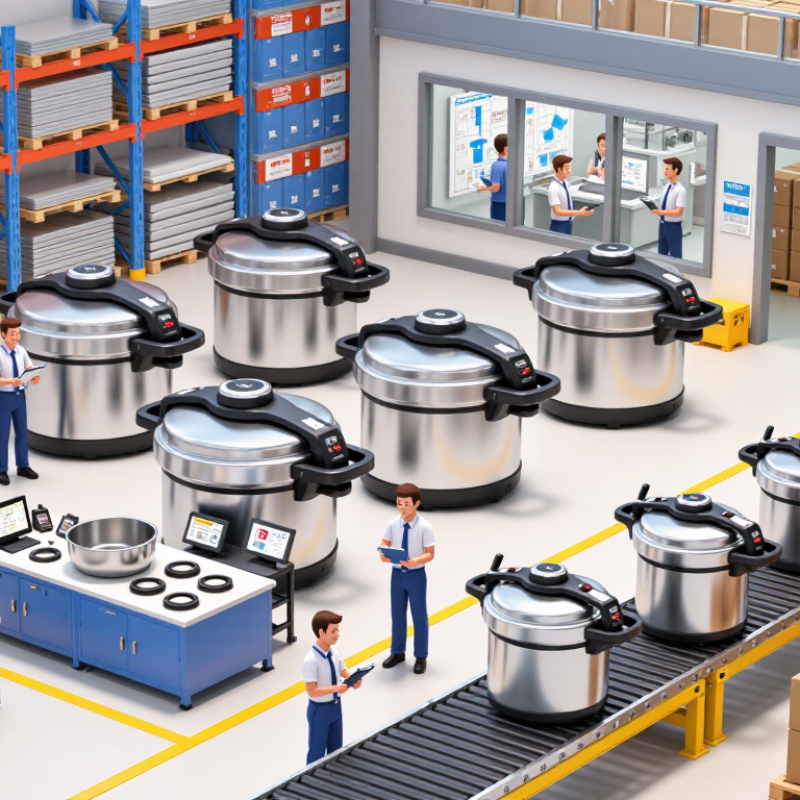
Best Large Electric Pressure Cooker Manufacturers in China

What Defines a Large Electric Pressure Cooker? 6–10 L Capacity and 70 kPa

A large electric pressure cooker usually means a 6–10 L inner pot, not a 6–10 L serving volume. This distinction matters during product selection. A 6 L model suits family meals, while a 10 L model supports batch cooking, catering, or large households. Most manufacturers require users to leave space for rice, beans, and expanding liquids.

A rated working pressure near 70 kPa indicates strong steam compression inside the sealed pot. It can reduce cooking time and soften tough ingredients efficiently. However, buyers should confirm whether 70 kPa means gauge pressure or absolute pressure. These figures are not interchangeable. Reliable manufacturers should provide pressure-control data, temperature testing, and clear maximum-fill markings. A practical inspection should also examine gasket fit, lid locking, steam release, and overheat protection.

When comparing large electric pressure cooker manufacturers in China, inspect both performance and production consistency. Look for food-contact materials, stable heating plates, accurate sensors, and documented leak testing. The inner pot should feel rigid, with an even coating or polished surface. Small details matter. Some samples may heat unevenly or show loose handles after repeated use. That is not a minor concern. It suggests the design needs more testing before bulk purchasing. Safety instructions should remain readable after cleaning, and replacement sealing parts should be available.

China’s Leading Manufacturers Compared by Models, Output, and OEM Reach

China’s leading large electric pressure cooker manufacturers differ in more than factory size. Their model portfolios usually include 6L, 8L, 10L, and 12L units for households, catering kitchens, and meal-preparation businesses. Larger models need stronger heating systems, thicker inner pots, and carefully tested locking structures. During supplier evaluations, I inspect sample consistency, control-panel response, sealing performance, and noise levels. Small details often expose weak process control.

Output capacity also requires practical verification. A factory may quote monthly production by counting every assembly stage, not finished units. I prefer checking completed goods, testing records, and peak-season staffing. Some established manufacturers can produce several thousand large cookers monthly, while smaller specialists offer more flexible pilot runs. Neither option is automatically better. High output can reduce unit costs, but it may limit customization when engineering teams are overloaded.

OEM reach depends on more than printing a customer logo. Strong suppliers support mold adjustment, private packaging, multilingual manuals, electrical specifications, and software changes for different markets. They should explain minimum order quantities, spare-part planning, inspection points, and corrective-action procedures. Factory audits help, but one visit is not enough. Test records vary. I would request repeated samples from different production lots before approving a large order. No factory is perfect, and my own first assessment can be wrong when delivery pressure hides unresolved defects.

Safety Compliance: GB 4706.19, IEC 60335-2-15, and Multi-Level Protection

For Chinese manufacturers, safety compliance must begin with GB 4706.19 and IEC 60335-2-15. These standards address insulation, leakage current, temperature rise, pressure control, and abnormal operation. Compliance is not just paperwork. Engineers should test a cooker with blocked vents, an incorrectly positioned lid, and an empty heating chamber.

Real protection needs several independent barriers. A pressure regulator controls steam release. An anti-block shield protects the exhaust path. A lid-lock mechanism prevents opening under pressure. Thermal fuses and temperature sensors limit overheating. Many factories also inspect gasket compression, grounding continuity, and dielectric strength during production. The China Household Electrical Appliances Association reported strong continuing demand for small kitchen appliances in 2023, increasing the importance of reliable quality control. Scale can expose weak processes quickly.

A 2024 Fortune Business Insights market analysis valued the global electric pressure cooker market above USD 5 billion in 2023. That growth creates pressure for faster manufacturing. It should not reduce testing time. A certificate is not a magic shield. Factory audits, sample retesting, and traceable component records remain necessary. Some suppliers still treat multi-level protection as a checklist, rather than a complete engineering system. That approach deserves reconsideration. Safety performance can change after tooling updates, firmware revisions, or gasket substitutions. Experienced buyers should request recent test reports, production inspection records, and evidence that GB 4706.19 requirements align with the intended IEC 60335-2-15 evaluation.

Best Large Electric Pressure Cooker Manufacturers in China — Safety Compliance: GB 4706.19, IEC 60335-2-15, and Multi-Level Protection

This reference chart maps major safety topics addressed by GB 4706.19 and IEC 60335-2-15. A value of 1 means the topic is covered by the standard’s safety framework; it is not a certification score or a manufacturer ranking. Large electric pressure cookers typically combine electrical insulation, grounding, thermal control, pressure limitation, lid interlocking, and abnormal-operation protection.

Factory Evaluation Using ISO 9001, CE, CB, UL, and Production Capacity

Selecting a large electric pressure cooker manufacturer in China requires more than comparing catalog photos and quoted prices. Factory evaluation should begin with ISO 9001 records, including corrective actions, supplier controls, and batch traceability. A certificate alone proves little if its scope excludes pressure appliances.

During a factory visit, inspect assembly lines, sealing rings, heating plates, control boards, and pressure-release components. Ask for recent production records and sample inspection reports. CE documentation should match the exact model and destination market. CB reports can support international electrical safety assessments, while UL recognition may apply to specific components or products.

Check whether testing covers insulation, overheating, abnormal pressure, grounding, and repeated cooking cycles. Request samples from normal production, not specially prepared units. Test them after transport vibration and voltage variation. Small details matter.

Production capacity needs physical evidence. Compare stated monthly output with worker numbers, molding machines, assembly stations, warehouse space, and shift schedules. A factory claiming high capacity may depend heavily on temporary labor or outsourced parts. That risk is easy to miss.

Keep questioning.

An audit cannot reveal everything. I would review quality data from at least three recent months and inspect unfinished units on the line. Delayed spare parts, inconsistent markings, or manual records often signal weak control. The best evaluation combines certification verification, technical testing, worker interviews, and observed production behavior. Some findings may remain uncertain, so contract terms should define inspection rights, defect limits, and corrective timelines.

Best Large Electric Pressure Cooker Manufacturers in China - Factory Evaluation Using ISO 9001, CE, CB, UL, and Production Capacity

Anonymous factory benchmark table for large electric pressure cooker sourcing. Certification fields indicate the documentation that should be verified for the specific model, factory, and destination market.

Anonymous Factory Profile Typical Product Range Rated Capacity Estimated Annual Capacity ISO 9001 Quality System CE Compliance Documentation CB Scheme Evidence UL Market-Access Path Production & Quality Controls OEM / ODM Capability Typical Lead Time Evaluation Score
Anonymous Factory Profile A Electric pressure cookers for household and light commercial use 6–10 L 100,000–250,000 units/year Verify current certificate Model-specific technical file required Request applicable CB report UL route depends on target market Incoming inspection, pressure-leak testing, electrical safety testing, functional testing, and final sampling inspection Private label, packaging customization, control-panel language, and basic housing changes 35–55 days after approved sample 84 / 100
Anonymous Factory Profile B Large-capacity household and food-service pressure cookers 8–12 L 250,000–500,000 units/year Certificate copy and scope to be checked Declaration and test evidence to be checked Availability depends on product configuration North American certification review required Automated assembly stations, pressure-control calibration, thermal cycling, grounding checks, and lot traceability Private label, firmware adjustment, mold coordination, artwork, and packaging development 40–60 days after design approval 89 / 100
Anonymous Factory Profile C Commercial-grade electric pressure cookers with stainless-steel inner pots 10–20 L 50,000–120,000 units/year Verify factory scope and audit date Confirm applicable directives and standards Request report for exact model family May require a separate North American evaluation Weld inspection, lid-lock verification, over-pressure protection testing, insulation checks, and water-resistance inspection Strong mechanical customization; longer tooling and validation cycle 50–75 days after technical confirmation 86 / 100
Anonymous Factory Profile D High-volume household pressure cookers for retail programs 5–8 L 500,000–1,000,000 units/year Verify certificate scope and manufacturing site Routine compliance documentation expected Confirm CB report coverage for electrical variants Target-country listing requirements apply High-throughput assembly, barcode traceability, automated electrical testing, accelerated life testing, and AQL final inspection Efficient private-label production; limited structural redesign without tooling investment 30–45 days for repeat orders 91 / 100
Anonymous Factory Profile E Compact-to-large multi-function pressure cookers 6–12 L 120,000–300,000 units/year Audit and certificate verification required Confirm EMC, LVD, RoHS, and food-contact evidence Request current model-specific documentation Certification pathway must be defined by importer Software-function testing, sensor calibration, pressure retention testing, temperature accuracy testing, and finished-product inspection Strong control-panel, recipe-program, language, and packaging customization 45–65 days after software and sample approval 87 / 100
Anonymous Factory Profile F Heavy-duty stainless-steel pressure cookers for institutional kitchens 12–24 L 30,000–80,000 units/year Verify quality-system coverage Confirm product-specific compliance route Applicable only when requested by the market May not be required outside North America Pressure-vessel component control, weld-quality checks, safety-valve testing, electrical safety inspection, and batch records Excellent capacity and component customization; lower suitability for small trial orders 60–90 days for new configurations 82 / 100
Evaluation basis: Production-capacity figures are practical annual benchmark bands rather than audited claims. ISO 9001, CE, CB, and UL documentation must be verified against the exact legal manufacturer, production site, model number, electrical rating, and destination-market requirements before purchase.

Supplier Ranking by Export Volume, Lead Time, Warranty, and Defect Rate

Choosing the best large electric pressure cooker manufacturers in China requires more than comparing factory prices.

Export volume can reveal production experience, but it may also hide inconsistent quality between batches. Review recent shipment records, destination markets, and repeat-order rates. A factory shipping thousands of units monthly should provide traceable inspection data, not only impressive figures.

Lead time matters when seasonal demand is tight. Ask for separate timelines for component sourcing, assembly, testing, and port delivery. A reliable manufacturer explains delays early and keeps safety stock for heating elements and control boards.

Warranty terms should state coverage length, replacement procedures, and response times. Defect rate figures deserve careful checking. Confirm whether they include cosmetic faults, electrical failures, and returns after delivery. Third-party inspections can compare factory claims with actual batch performance.

Tips:

Request a pilot order before committing to a full container. Test pressure control, sealing rings, buttons, and packaging after transport. Ask for monthly defect reports and corrective-action records. No ranking is perfect. Export volume may favor larger suppliers, while a smaller factory could offer better communication and lower defects. That difference should be verified through samples, not promises. Experienced buyers should also record lead-time changes across three orders, because one successful shipment proves very little.

FAQS

What capacity is considered large for an electric pressure cooker?

A large model usually has a 6–10 liter inner pot. A 6-liter cooker suits family meals, while 10 liters supports batch cooking. The pot holds less during use because rice, beans, and liquids expand. Do not confuse pot capacity with serving volume.

What does a pressure rating near 70 kPa indicate?

It indicates strong steam compression inside the sealed pot. This pressure can shorten cooking time and soften tough ingredients. Check whether the figure means gauge or absolute pressure. Those measurements are different.

What safety features should buyers inspect?

Inspect the lid lock, sealing gasket, steam release, and overheat protection. The cooker should also have accurate sensors and stable heating. Look for clear maximum-fill markings near the inner pot. Small details matter.

How can buyers assess the inner pot’s quality?

The inner pot should feel rigid and sit evenly on the heating plate. Its coating should look consistent, without bubbles, scratches, or thin patches. Handles must remain firm after repeated handling. One loose handle deserves attention.

Which factory records should be reviewed during an evaluation?

Review quality records, corrective actions, supplier controls, and batch traceability. The quality certificate should cover pressure appliances specifically. Request recent inspection reports, not only polished catalog photographs. Paperwork can mislead.

What testing should a manufacturer provide?

Ask for insulation, grounding, overheating, abnormal-pressure, and repeated-cycle testing. Test samples from normal production, rather than specially prepared units. Transport vibration and voltage changes can reveal hidden weaknesses. Testing should imitate real conditions.

How can production capacity claims be verified?

Compare monthly output with workers, assembly stations, molding machines, and warehouse space. Also inspect shift schedules and outsourced components. A large output claim may depend on temporary labor. That risk is easy to miss.

How should buyers compare lead time, warranty, and defect rates?

Request separate timelines for sourcing, assembly, testing, and delivery. Warranty terms should explain coverage, replacements, and response times. Confirm whether defect rates include electrical failures, cosmetic faults, and customer returns. Numbers need context.

Is a pilot order useful before a large purchase?

Yes. A pilot order can expose weak seals, uneven heating, faulty buttons, or damaged packaging. Test the cooker after transport, not only at the factory. Compare results with monthly defect reports and corrective actions. One successful shipment proves very little.

Conclusion

This guide explains what defines a Large Electric Pressure Cooker, focusing on practical capacities of 6–10 liters, operating pressure around 70 kPa, and the needs of households, catering services, and commercial kitchens. It compares leading Chinese manufacturers by product range, manufacturing output, customization capability, export experience, and OEM support, helping buyers identify suppliers that can meet different volume and design requirements.

The article also highlights essential safety considerations, including GB 4706.19 and IEC 60335-2-15 requirements, together with multi-level protection such as pressure release control, overheating prevention, lid-lock systems, and electrical safety design. For factory evaluation, buyers should review ISO 9001 procedures, CE and CB documentation, applicable UL testing, production capacity, quality-control records, lead times, warranty policies, export volume, and defect rates. A balanced supplier ranking should consider both product reliability and long-term service performance.


Mason

Mason

Mason is a seasoned marketing professional with a deep expertise in the company's offerings and a passion for driving brand awareness. With a strong background in digital marketing strategies, he has an innate ability to connect with diverse audiences and effectively communicate product benefits.......