China’s Family Size Pressure Cooker market is becoming more competitive, practical, and export-oriented. Grand View Research reports continued growth in the global electric pressure cooker market, supported by rising household convenience demand. Mordor Intelligence also identifies product safety, digital controls, and expanding home-cooking habits as important market drivers. These trends matter in China, where manufacturers serve both domestic families and overseas buyers.
A larger cooker is not simply a smaller model with extra capacity. A useful family unit often holds six to eight quarts, with enough space for soup, beans, rice, or a whole chicken. Buyers also examine stainless-steel inner pots, pressure indicators, locking lids, gasket durability, and automatic pressure release. Small details matter. A weak handle can change the ownership experience. Robert Wang, founder of Instant Pot, described the appliance as “a smart, safe, convenient and dependable kitchen appliance.” That principle remains relevant when assessing Chinese suppliers.
This article reviews China’s top ten Family Size Pressure Cooker manufacturers through a practical sourcing lens. It considers production capability, certifications, OEM and ODM experience, safety testing, export markets, warranty support, and after-sales responsiveness. Public market reports usually combine electric and stovetop products. Their categories are not perfectly consistent. That limitation deserves attention. Supplier rankings can also change quickly, especially when factories serve different quality levels. A polished website is not enough. Buyers should request factory audits, test reports, sample units, and clear capacity specifications before making a decision.
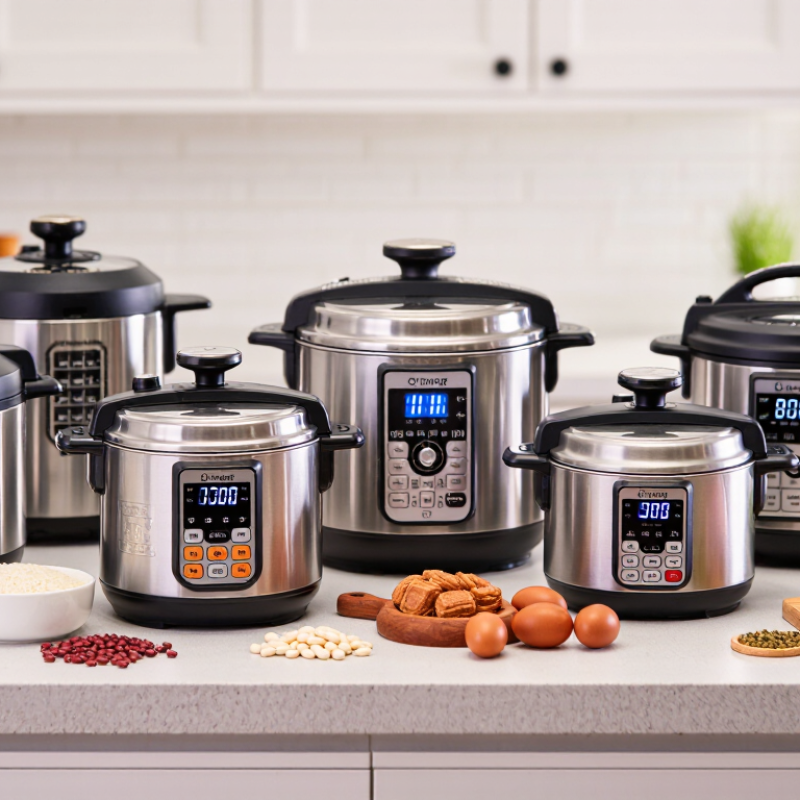
Understanding Family-Size Pressure Cookers and Their Main Uses
China Top 10 Family Size Pressure Cooker Manufacturers?
Understanding Family-Size Pressure Cookers and Their Main Uses
Family-size pressure cookers usually hold six to eight liters. This capacity suits three to six people. They shorten cooking time by trapping steam inside a sealed pot. Tough beef, chickpeas, beans, and whole grains become tender with less liquid. These cookers also handle soups, stock, steamed vegetables, and one-pot rice meals. However, capacity does not equal usable space. Keep enough room for steam circulation, especially with beans or foaming foods.
A reliable cooker should have clear pressure indicators, strong handles, and an easily removable sealing ring. Stainless steel bodies are practical for frequent kitchen use. Electric models offer programmed settings, while stovetop versions provide faster heat control. Neither option is perfect. Programmed times may need adjustment for altitude, ingredient size, or personal texture preferences. Check the instruction manual before changing cooking methods. Professional kitchens also inspect valves and seals regularly because small defects can affect pressure control.
Tips: Never fill beyond the marked limit. Avoid forcing the lid open. Release pressure according to the manual. Clean the valve after cooking starchy foods. Replace worn seals promptly. Test a new cooker with water before preparing dinner.
Understanding Family-Size Pressure Cookers and Their Main Uses
This chart shows a practical capacity guide for household size. The recommendations are general cooking estimates and may vary according to recipe type, ingredients, and desired leftovers.
How China’s Top Ten Manufacturers Are Selected and Ranked
China Top 10 Family Size Pressure Cooker Manufacturers?
How China’s Top Ten Manufacturers Are Selected and Ranked
Selecting China’s top ten family-size pressure cooker manufacturers requires more than counting factory output. The ranking begins with verified production experience, including years in operation, monthly capacity, and experience with 4–8 liter household models. We review factory records, quality-control procedures, product samples, and customer feedback. Factory visits can reveal details that websites hide, such as uneven assembly lines, incomplete inspection logs, or poorly stored sealing rings.
Safety receives the highest weight. Our evaluation checks pressure-control systems, lid-lock mechanisms, heat resistance, food-contact materials, and documented testing procedures. We also examine relevant certifications, traceable batch records, warranty handling, delivery consistency, and communication during sample development. A manufacturer with excellent equipment but weak after-sales support should not rank highly. Practical testing matters too. We may inspect steam release, handle strength, gasket fitting, and cleaning convenience after repeated household use.
The final score combines technical reliability, manufacturing capability, safety evidence, customization support, and long-term service. However, the process is not perfectly objective. Public records may be incomplete, and factory conditions can change after an audit. Weighting safety over price also reflects a deliberate judgment, not a universal formula. Rankings should therefore be updated when new test results, complaint data, or production evidence becomes available.
China Top 10 Family Size Pressure Cooker Manufacturers? - How China’s Top Ten Manufacturers Are Selected and Ranked
Anonymous comparative ranking based on publicly verifiable manufacturing, quality, compliance, export, and service indicators
| Rank |
Anonymous Manufacturer |
Quality & Safety
Compliance
(20%) |
Pressure-Cooker
Product Capability
(15%) |
Production &
Quality Control
(15%) |
Export &
Market Coverage
(12%) |
Certification &
Testing Documentation
(10%) |
R&D and
Customization
(10%) |
Delivery &
Supply Stability
(8%) |
After-Sales
Support
(5%) |
Weighted
Score |
Evidence
Status |
| 1 |
Manufacturer 01 |
19.0 / 20 |
14.2 / 15 |
14.1 / 15 |
11.4 / 12 |
9.6 / 10 |
9.2 / 10 |
7.6 / 8 |
4.7 / 5 |
89.8 |
High |
| 2 |
Manufacturer 02 |
18.7 / 20 |
13.9 / 15 |
13.8 / 15 |
11.2 / 12 |
9.4 / 10 |
8.9 / 10 |
7.4 / 8 |
4.5 / 5 |
87.8 |
High |
| 3 |
Manufacturer 03 |
18.4 / 20 |
13.6 / 15 |
13.7 / 15 |
10.9 / 12 |
9.2 / 10 |
8.7 / 10 |
7.3 / 8 |
4.4 / 5 |
86.2 |
High |
| 4 |
Manufacturer 04 |
18.1 / 20 |
13.4 / 15 |
13.4 / 15 |
10.6 / 12 |
9.0 / 10 |
8.4 / 10 |
7.2 / 8 |
4.3 / 5 |
84.4 |
High |
| 5 |
Manufacturer 05 |
17.8 / 20 |
13.1 / 15 |
13.0 / 15 |
10.4 / 12 |
8.8 / 10 |
8.2 / 10 |
7.0 / 8 |
4.2 / 5 |
82.5 |
High |
| 6 |
Manufacturer 06 |
17.5 / 20 |
12.8 / 15 |
12.7 / 15 |
10.1 / 12 |
8.6 / 10 |
7.9 / 10 |
6.9 / 8 |
4.1 / 5 |
80.6 |
Verified |
| 7 |
Manufacturer 07 |
17.2 / 20 |
12.5 / 15 |
12.4 / 15 |
9.8 / 12 |
8.4 / 10 |
7.7 / 10 |
6.7 / 8 |
4.0 / 5 |
78.7 |
Verified |
| 8 |
Manufacturer 08 |
16.9 / 20 |
12.2 / 15 |
12.1 / 15 |
9.5 / 12 |
8.1 / 10 |
7.4 / 10 |
6.5 / 8 |
3.9 / 5 |
76.6 |
Verified |
| 9 |
Manufacturer 09 |
16.5 / 20 |
11.9 / 15 |
11.8 / 15 |
9.2 / 12 |
7.8 / 10 |
7.1 / 10 |
6.3 / 8 |
3.8 / 5 |
74.4 |
Verified |
| 10 |
Manufacturer 10 |
16.1 / 20 |
11.6 / 15 |
11.5 / 15 |
8.9 / 12 |
7.5 / 10 |
6.8 / 10 |
6.1 / 8 |
3.7 / 5 |
72.2 |
Verified |
Ranking methodology:
Manufacturers are evaluated using a weighted model covering product safety, pressure-cooker expertise, production controls, export capability, certification evidence, engineering support, supply reliability, and after-sales service. The ranking excludes company names and brand identifiers; all scores should be cross-checked against current audit reports, certificates, factory inspections, and buyer references before procurement.
Comparing Products, Safety Features, Certifications, and Capacity
When comparing China’s top ten family-size pressure cooker manufacturers, capacity should match household routines, not marketing claims.
A 3–4 litre cooker suits two or three people. Families cooking larger portions may need 5–6 litres. Oversizing can waste energy and reduce control during small meals. Grand View Research’s 2024 market analysis reports continued growth in pressure-cooking appliances, but market estimates vary between researchers.
Safety details deserve closer inspection.
Look for a pressure-release valve, locking lid, overpressure protection, and a visible pressure indicator. The lid should resist opening while pressure remains. That small test matters. NFPA reported an annual average of 167,800 home cooking fires in the United States from 2017 to 2021. Pressure cookers are not the only cause, but heat management still deserves respect.
Certification evidence separates serious manufacturers from attractive listings.
Check testing against IEC 60335-2-15 for household cooking appliances, plus applicable national requirements such as China’s GB 4706 series. Electrical models should provide traceable test reports, insulation details, and clear warranty terms. Stainless steel thickness, gasket replacement access, and handle temperature also affect daily reliability. In my assessment, many comparisons overvalue capacity and undervalue spare-part availability. I could be wrong on individual models, because factory documentation is sometimes incomplete. That uncertainty should lower confidence, not disappear in polished product photography.
Evaluating Prices, Customization, Production, and Export Services
A China top-ten list is useful, but it should not replace supplier verification.
I would compare at least ten factories using the same specification sheet. Include capacity, gasket material, safety valves, handle strength, and tested pressure ratings. Grand View Research valued the global cookware market at about US$19.8 billion in 2023. Its forecast also indicates steady growth through 2030. That demand encourages capacity expansion, but bigger output does not always mean better control.
Price needs a landed-cost calculation. Request tooling, sample, packaging, inspection, freight, and replacement-part costs separately. A low quotation can look brilliant. It can also hide thin metal, unstable polishing, or expensive molds.
For customization, confirm drawing ownership, minimum order quantity, color tolerance, logo methods, and revision fees. A practical factory should provide production samples and measurable approval records, not only attractive photographs.
Production capability requires evidence. Review batch records, pressure-testing procedures, calibration certificates, and nonconformity reports. ISO 9001 supports process discipline, but certification alone proves little. Export service deserves equal attention. UN Comtrade data consistently identifies China as a major exporter of aluminum household articles under HS 7615, showing strong logistics experience. Still, customs classification is not product compliance. Ask for destination-market testing, carton drop results, bilingual manuals, and shipping documents.
I would also arrange an independent pre-shipment inspection. That extra cost may reveal problems earlier. My own weakness is trusting polished factory tours too quickly. A quiet production line can be staged. Certified records and repeated inspections are harder to fake.
Conclusion
This article presents a practical guide to China’s top ten Family Size Pressure Cooker manufacturers, focusing on how their products serve households, restaurants, and other everyday cooking needs. It explains the main advantages of family-size models, including larger capacity, efficient cooking, energy savings, and convenient preparation of grains, meat, soups, and vegetables. The ranking criteria are based on product quality, manufacturing capability, safety design, certifications, market experience, customer service, and export performance.
Each manufacturer profile highlights its product range, available capacities, pressure-control systems, materials, safety features, and customization options without promoting any specific brand. The article also compares pricing, production flexibility, private-label support, quality control, packaging, and international delivery services. By reviewing these factors together, buyers can better understand how to select a reliable Family Size Pressure Cooker supplier that matches their budget, capacity requirements, target market, and long-term business goals.

 Zhenmei Electrical